How to Protect Home Foundations from Water Damage
Protecting a foundation from water damage comes down to one idea. Keep water moving away from the house instead of letting it pool against the walls. Our team at Chris' Carpet Service & Water Restoration has treated foundation water damage across Pinellas County for nearly fifty years, and most of those calls start with a drainage problem nobody ever noticed.
Sounds easy, right? Then a summer storm drops three inches in an hour and you learn where your yard really drains.
Why Florida Foundations Face a Different Water Problem
Florida foundations rarely flood from below, they get soaked from the side. Almost every home around Largo sits on a concrete slab or a block stem wall. There's no basement to fill with groundwater. The threat is rain, roof runoff, and sprinkler spray soaking the soil right against your exterior walls.
Concrete looks solid. It isn't. A slab is full of tiny pores. When the soil beside it stays wet, moisture wicks sideways and up into the slab edge and the block above it.
Older Largo homes add a wrinkle. Plenty of them sit on block stem walls with fill dirt inside, and that fill holds water long after the yard looks dry.
So foundation trouble here almost never looks like a flood. It looks like one warped baseboard in the corner of a guest room. Or a musty closet that never quite airs out.
Sandy Soil Is Not the Free Pass People Think
Pinellas soil drains fast. That leads plenty of homeowners to ignore their grading entirely. The catch is our water table.
After a wet stretch, the sand fills up and stops taking water. Runoff then heads for the lowest point in your yard. If that low point is your slab edge, you have a problem.
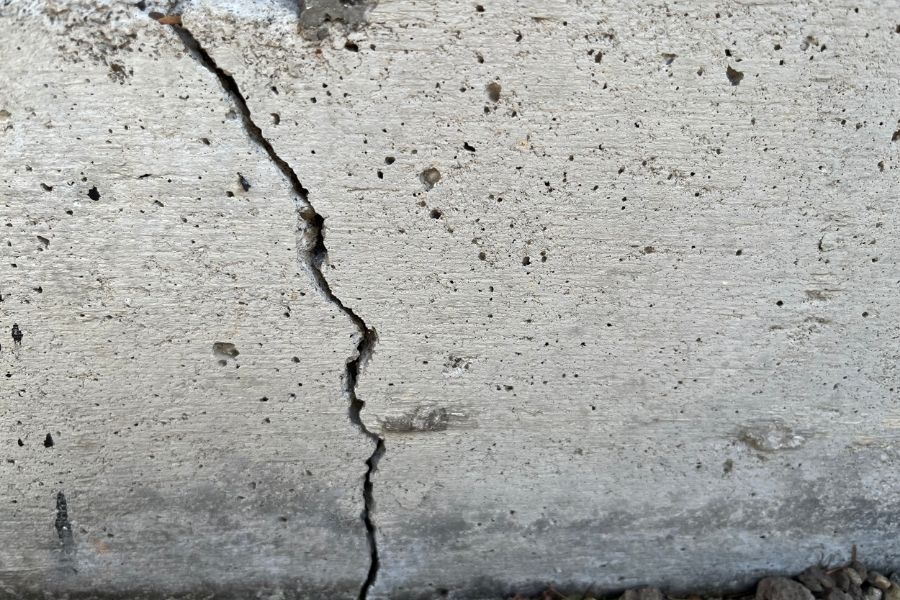
Width matters less than whether it stays damp. A crack that never dries out is the one worth calling about.
Warning Signs Your Foundation Is Taking On Water
Foundation moisture shows up at the edges of rooms before anywhere else. Water enters a slab or stem wall at the perimeter, so damage appears along exterior walls first. Homeowners often blame a plumbing leak and start opening walls in the wrong spot.
Walk your exterior walls once a season and look for these:
- Baseboards on outside walls that feel soft, swollen, or separated from the wall
- A chalky white residue near the bottom of block walls, called efflorescence, which is mineral salt left behind as water evaporates
- Flooring cupping or lifting around the perimeter of a room instead of the middle
- Grout lines darkening in a band along an exterior wall
- A musty smell in closets that back up to an outside wall
- Slab cracks that stay damp days after the last rain
- Paint bubbling low on an interior wall, usually within a foot of the floor
Any one of these might be nothing. Two or three in the same corner is a pattern. Patterns are worth chasing down before hurricane season tests them.
Already Seeing Water Where It Shouldn't Be?
Moisture that reaches your flooring or baseboards needs professional drying, not a box fan and hope. Our IICRC certified crew answers the phone around the clock.
Get Storm and Flood Damage HelpHow to Move Water Away From Your Foundation
Every fix that works does the same job. It puts distance between water and your slab. You don't need to regrade the yard or install a fancy drain system. Most foundation trouble we see in Largo homes comes down to five simple upkeep items that slid over the years.
Start by Watching a Storm
The best tool you own is a rain jacket. Step outside during the next real downpour and watch where the water goes.
Where does it sheet? Where does it pool? Which downspout is firing into a flowerbed against the wall? Five minutes of this beats an hour of guessing.
Bring your phone. A short video of where water runs during a storm is worth far more than trying to recall it two weeks later.
Then Work Through These Five
- Fix the grade. Soil should drop about six inches over the first ten feet away from the house. Over time, settling and landscaping flatten that slope out.
- Extend your downspouts. Discharge should land four to six feet from the wall, not at the corner of the slab. Clogged and undersized gutters cause more foundation moisture than almost anything else.
- Aim your sprinklers off the house. Heads that mist the wall keep that soil damp and feed mold behind the stucco.
- Pull mulch back. Mulch piled above the slab edge bridges right over the builder's moisture barrier.
- Check your AC condensate line. A Florida air handler pulls gallons of water from the air each day. If that line drains at the slab edge, you have a year round leak.
That last one catches people off guard. It has nothing to do with weather.
| Trouble Spot | What Goes Wrong | Check It |
|---|---|---|
| Gutters and downspouts | Clogs send roof water straight down the wall | Twice a year |
| Soil grading | Settles flat or slopes back toward the slab | Yearly |
| Irrigation heads | Spray hits walls and keeps soil saturated | Every season |
| AC condensate line | Clogs or drains beside the foundation | Monthly in summer |
| Control joints and cracks | Open seams let water reach slab edges | Yearly |
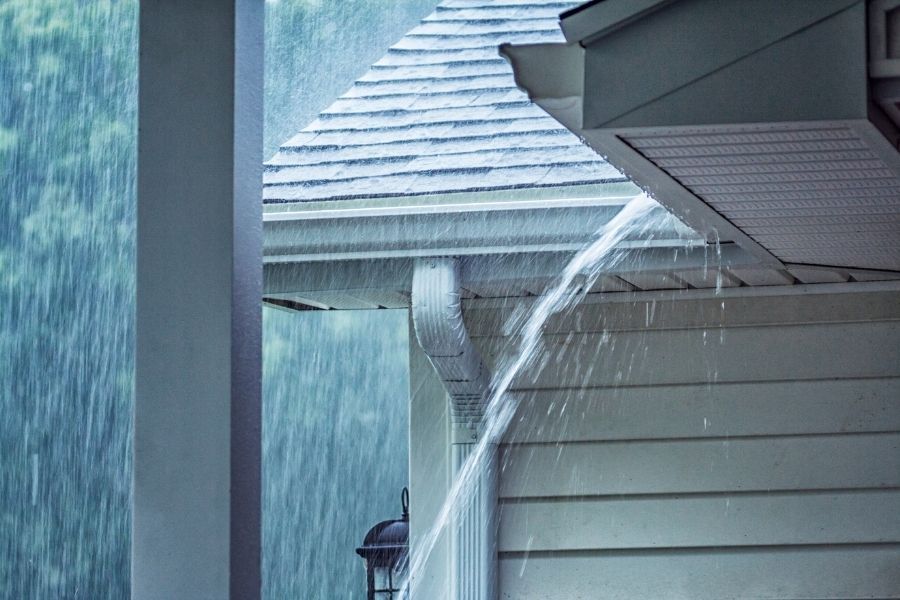
A downspout extension is one of the cheapest upgrades available and one of the most effective at keeping runoff off your slab.
Your Pre-Storm Foundation Check
A foundation that shrugs off afternoon rain can still fail in a hurricane. Wind driven rain acts differently. It gets forced sideways into seams and openings that shed water fine on a normal day. The Insurance Institute for Business & Home Safety has documented how wind driven rain finds entry points that never leak otherwise.
Five Things to Check Before a Storm Arrives
1. Clear gutters fully. One clog can redirect a whole roof section.
2. Reattach any downspout extensions you moved for mowing.
3. Clear debris from yard drains and swales so runoff has an exit.
4. Move planters and furniture off the slab edge where they trap water.
5. Photograph the dry foundation and save it. Your insurer will want a before.
Run this list at the start of the season, then again if a named storm turns toward the Gulf. It pairs well with our broader guide to preventing water damage before hurricane season, which covers the rest of the house.
When Foundation Moisture Becomes a Mold Problem
Mold needs about 24 to 48 hours of steady moisture to take hold. Florida hands it those conditions all year. A damp slab edge doesn't dry out on its own here. It feeds the wall above it, and by the time you smell anything, growth has been going for weeks.
The EPA's guide to mold and moisture control makes the point plainly. You cannot fix a mold problem without fixing the water problem under it.
Scrub the drywall all you want. If the soil outside is still wet, it comes back. We've returned to houses that were cleaned twice before anyone thought to look outside.
This is where a drainage issue stops being a yard chore. It turns into a health and structure question. Our team holds a Florida mold license, and when we handle professional mold remediation, we trace the moisture source first. Otherwise we'd just be booking our own return visit.
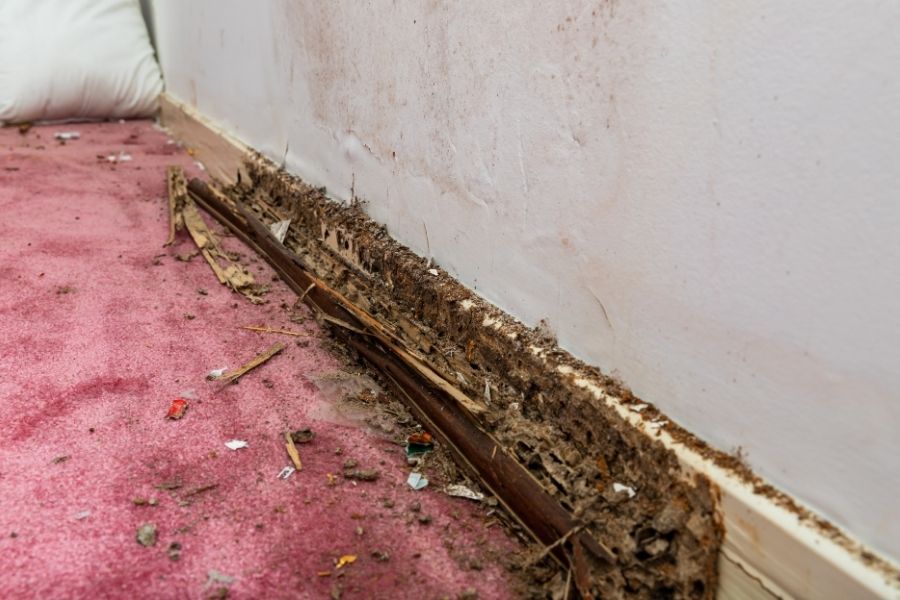
By the time staining climbs the wall, the pad under that carpet has been holding moisture for weeks.
Not sure if that damp corner is foundation moisture or something else? It helps to know the common entry points rain uses before you start opening walls.
Getting Help Before Small Turns Into Expensive
Foundation water damage is slow, quiet, and easy to fix when you catch it early. Grading and gutters are a weekend job. Replacing floors and cleaning out a wall cavity is not.
Spotted soft baseboards, a musty closet, or water pooling where it shouldn't? Contact our team for a free estimate.
Chris' Carpet Service & Water Restoration is a family owned, women owned company serving Largo and the wider Tampa Bay area. Someone picks up the phone at any hour. Call us.
Frequently Asked Questions
Can water damage a concrete slab foundation?
Yes. Concrete is porous, so steady moisture in the soil around it wicks into the slab edge and the block above. That brings efflorescence, failed floor adhesive, swollen baseboards, and mold in the wall, even when the concrete itself stays sound.
How far should downspouts drain from a Florida home?
Aim for four to six feet from the foundation wall. Anything shorter dumps roof runoff into the soil beside your slab. Extensions cost little, and they usually make the biggest difference of any fix on this list.
Does my homeowners insurance cover foundation water damage?
It depends on the source. Sudden events like a burst pipe are usually covered. Slow damage from poor drainage or skipped upkeep usually is not. Photos of your foundation taken before storm season help a lot if you file.
How do I know if it's foundation moisture or a plumbing leak?
Location is the clue. Foundation moisture shows up along exterior walls and gets worse after rain. Plumbing leaks show up near fixtures and stay steady no matter the weather. A moisture meter reading settles it fast.