

Kitchen Water Damage - 7 Hidden Dangers
Most kitchen water damage happens where you can't see it: under the sink, behind the dishwasher, and beneath the floor. You find out later, usually the hard way. Our IICRC certified team at Chris' Carpet Service & Water Restoration dries out kitchen water damage all over Tampa Bay, so we know where it likes to hide.
What Are the 7 Hidden Dangers of Kitchen Water Damage?
The seven hidden dangers of kitchen water damage are sink leaks, dishwasher leaks, ice maker line failures, drain backups, water trapped on the slab, hidden mold, and wet wiring. Each one starts small. Left alone, any of them can wreck cabinets, floors, and drywall.
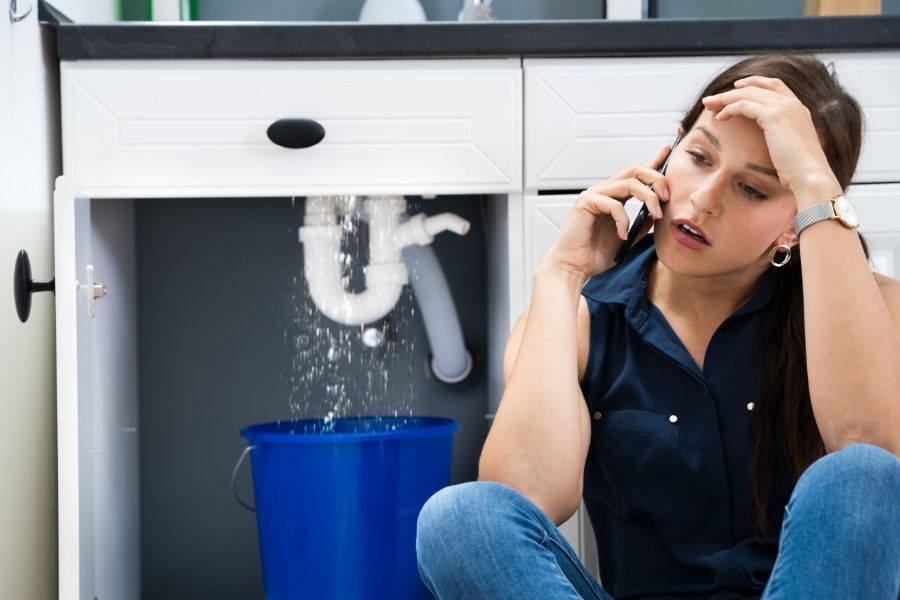
A slow drip under the sink can swell a particleboard cabinet floor long before anyone spots a puddle.
1. Slow Drips Under the Sink
Supply lines, the drain trap, and the faucet base all wear out with daily use. The drip lands on a cabinet floor that's usually particleboard. Particleboard soaks up water, then swells and crumbles. Our post on why your kitchen sink is leaking covers the usual suspects.
2. Dishwasher Leaks That Travel Under the Floor
Dishwashers leak from worn gaskets, loose hoses, and cracked drain lines. The water runs under the unit and beneath the floor, where no towel can reach. Warped planks in front of the dishwasher are a classic clue, and our guide to dishwasher leaks and their warning signs shows what else to check.
3. The Ice Maker Line Behind the Fridge
The thin water line behind your fridge is easy to forget. Older plastic lines turn brittle, and a pinhole leak can quietly soak the wall for months. Pull the fridge out twice a year and check for dark spots. You'll probably find a few lost magnets, too.
4. Dirty Water From Drain and Disposal Backups
Not all kitchen water is clean. Sink and disposal backups carry food, grease, and bacteria. The IICRC restoration standards our technicians follow treat that water as contaminated, not a simple spill. If the backup comes from the main sewer line, call sewage backup cleanup pros in protective gear.
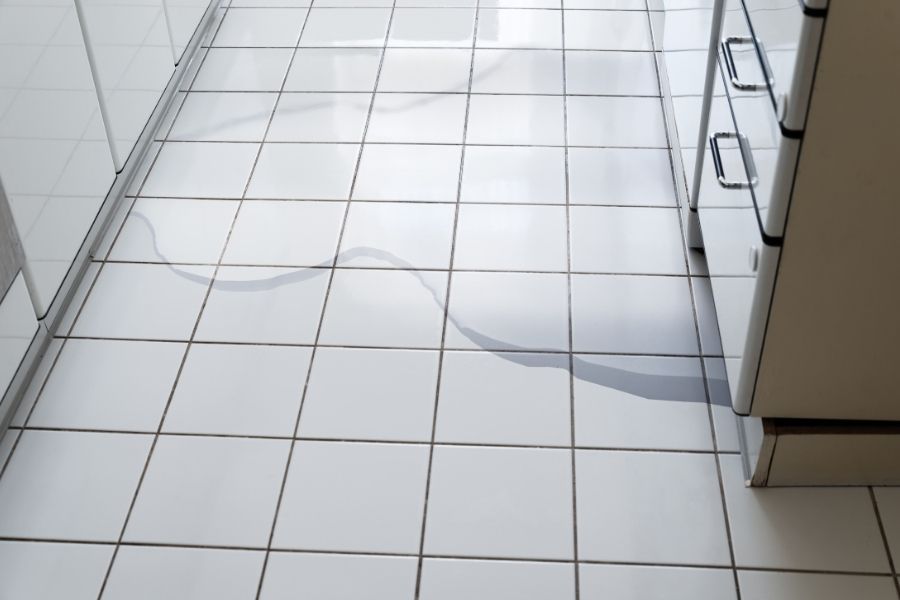
A trail this thin is easy to step over, yet it often points to a slow leak from an ice maker line or appliance supply valve.
5. Water Trapped on the Concrete Slab
Most Tampa Bay homes sit on a concrete slab, and many kitchens have vinyl plank or laminate floating on top. Water that slips under those floors spreads across the slab with nowhere to go. The floor may look fine for weeks.
6. Mold Behind Cabinets and Toe Kicks
Florida humidity gives mold a head start. The EPA's guide to mold and moisture says wet materials should dry within 24 to 48 hours to prevent mold, and a hidden leak blows right past that window. Mold then settles behind toe kicks and inside the wall behind the dishwasher. Our tips on preventing mold growth in hot weather explain why our summers make it worse.
7. Wet Outlets and Appliance Wiring
Water and electricity don't mix. Yet kitchens pack both into one small room. A leak near outlets, the disposal, or dishwasher wiring creates a real shock risk, so never touch anything electrical that's wet.
How Can You Spot Kitchen Water Damage Early?
You can catch most kitchen water damage early by checking a few key spots once a month. It takes about five minutes. Grab a flashlight, open the sink cabinet, and trust your nose, because a musty smell often shows up before any stain does.
| Warning Sign | What It Often Means | Where to Look |
|---|---|---|
| Soft or swollen cabinet floor | A slow drip from a supply line or drain | Inside the sink base cabinet |
| Musty smell with no visible mold | Moisture trapped behind walls or cabinets | Toe kicks and the wall behind the fridge |
| Lifted planks or loose tiles | Water spreading under the flooring | In front of the dishwasher and sink |
| Water bill creeping up | A hidden leak running all day | Your monthly utility bill |
What Should You Do When You Find Water in Your Kitchen?
When you find water in your kitchen, stop the source first and then get everything drying fast. Speed matters more than anything else. These five steps keep a small leak from turning into torn out cabinets and a brand new floor.
- Shut off the water at the valve under the sink or behind the fridge, or at the main shutoff.
- Cut the power only if you can reach the breaker panel without standing in water.
- Take photos of the water and damage for your insurance adjuster.
- Empty the cabinet and leave the doors open so air can move.
- Call a certified pro, because towels and a box fan can't reach water under the floor or inside the wall.
First few hours
24 to 48 hours
One to two weeks
A month or more
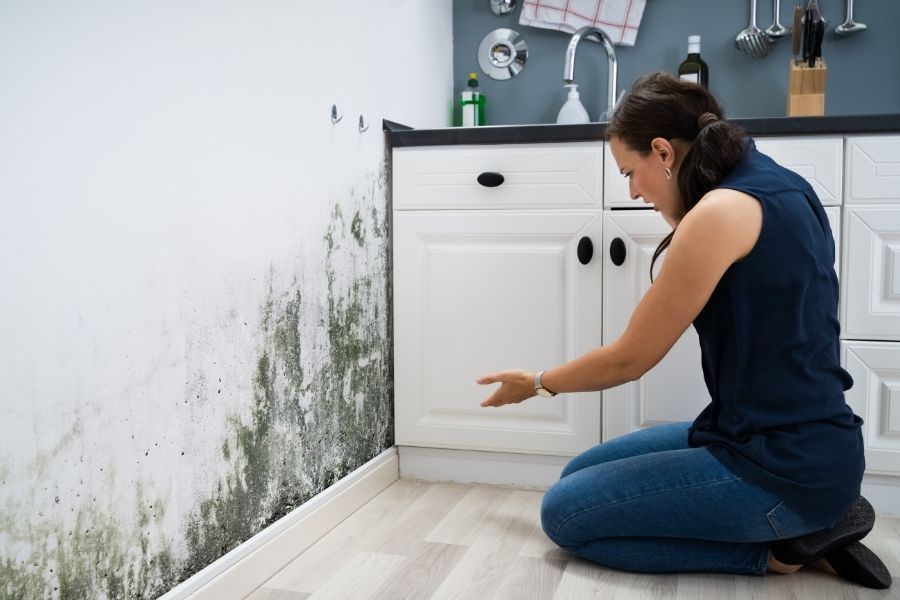
With Pinellas County humidity, a slow leak behind the cabinets can spread into mold along the lower wall faster than most homeowners expect.
Frequently Asked Questions About Kitchen Water Damage
Can I dry out a wet kitchen cabinet myself?
If the leak was small and clean and you caught it within hours, fans and open doors may be enough. Swollen particleboard won't shrink back, though. If the cabinet floor feels soft or smells musty, get the moisture checked.
Does homeowners insurance cover kitchen water damage?
Many policies cover sudden leaks, like a burst supply line or a failed dishwasher hose. Slow leaks that went on for months are often excluded. We work with insurance companies all the time and can help document the damage.
How long does it take to dry out a kitchen after a leak?
Most kitchens need a few days of professional drying. Three to five is common, but water under cabinets or floating floors can take longer. We check moisture levels daily and keep the equipment running until the readings say it's dry.