
How to Prepare Your Clearwater Home for Professional Water Restoration
Water damage can turn your world upside down fast. If you've called professional water damage restoration services in Clearwater, you've taken the most important step. But how do you prepare your home to make restoration as smooth and effective as possible?
We at Chris' Carpet Service & Water Restoration have been helping Clearwater homeowners recover from water emergencies since 1976. In nearly five decades of responding to floods, burst pipes, and storm damage across the Tampa Bay area, we've learned that smart preparation makes a huge difference in how quickly your home bounces back.
Time matters in water emergencies. Within 24 hours, moisture penetrates drywall and insulation, creating perfect conditions for mold growth. The sooner restoration equipment starts running, the better your outcome.
Why Quick Action Matters
| Timeframe | What Happens |
|---|---|
| Within Minutes | Water spreads through flooring, soaks into walls, damages furniture |
| Within Hours | Drywall begins swelling, wood starts warping, metal shows tarnish |
| 24-48 Hours | Mold and mildew growth begins, serious odors develop |
| Week+ | Structural damage, extensive mold, costs increase significantly |
Source: IICRC S500 Standard for Water Damage Restoration
Safety Comes First (Always)
Your safety matters more than any possession or preparation task. Don't become a casualty trying to prepare your home.
Never do these things before professionals arrive:
- Don't enter standing water without knowing its source. Water from sewage backups or flooding can contain bacteria and chemicals. According to the EPA's mold cleanup guidelines, contaminated water requires professional handling.
- Don't use electrical appliances near wet areas. Water and electricity create deadly combinations. Stay clear until professionals assess.
- Don't remove soaked materials attached to structures. Let trained technicians evaluate what needs removal.
If you smell gas, leave immediately. If you see sparks or exposed wiring, stay out. If standing water covers electrical outlets, don't enter without professional clearance.

Severe water damage requires professional assessment before safe entry.
Document Everything (Your Insurance Will Thank You)
Before moving anything, grab your phone and document everything. Insurance claims depend on documentation quality. The more evidence you capture now, the smoother your claims process runs later.
Take photos and videos of the water source if visible, standing water depth in all affected rooms, damaged furniture and materials, wet belongings before moving them, and serial numbers on damaged appliances. Make a written list too. Date everything.
For detailed guidance, check out our article on how to document water damage for insurance claims.
Pro tip from our decades working with insurance companies: document both dramatic damage and subtle signs. That small ceiling stain? Photograph it. That musty smell? Make a note. These details help adjusters understand the full scope.
Smart Preparation Steps
Simple actions you can take before professionals arrive (if safe to do so).
✓ Move Small Valuables
Remove jewelry, electronics, documents, and portable items from affected areas. For books, stand them upright with pages fanned. Don't turn on wet electronics. Place aluminum foil under furniture legs on wet floors.
✓ Clear Equipment Paths
Professional restoration requires industrial dehumidifiers and air movers. Clear hallways, doorways, and stairs between your driveway and damaged areas. Secure pets in safe rooms away from work zones.
✓ Remove Surface Water
Use towels or a mop to remove standing water if safe. Lift area rugs and bath mats off wet floors. This isn't full extraction, just reducing immediate spreading.
✓ Increase Air Circulation
If electrical outlets are dry and safe, run fans and open windows. Know where your main water shutoff valve is and how to turn it off if needed.
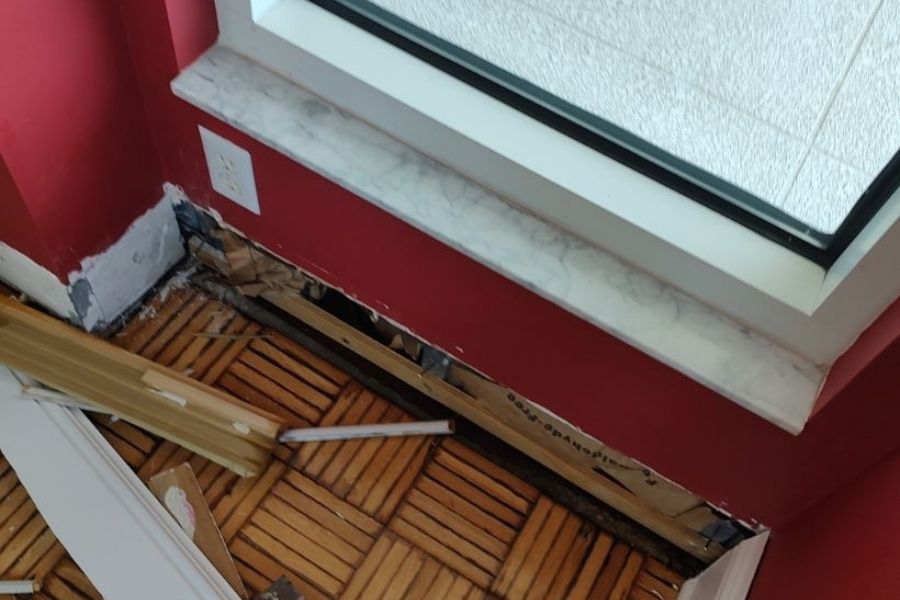
Professional restoration often requires removing baseboards and affected materials to ensure thorough drying.
What to Expect When the Team Arrives
Understanding the restoration process helps you know what's normal. When our IICRC-certified technicians from Chris' Carpet Service & Water Restoration arrive at your Clearwater home, here's what happens:
Initial Assessment: The team inspects affected areas, measures moisture levels using specialized meters, and determines water categories and damage classes. Thermal imaging cameras find hidden moisture in walls and ceilings. This assessment determines the restoration plan.
Water Extraction: Professional extractors remove standing water. These machines pull thousands of gallons per hour and can extract water from carpets, padding, and subflooring. Complete extraction prevents continued damage.
Controlled Demolition: Water-soaked drywall, insulation, and flooring that can't be salvaged must be removed to prevent mold growth. Professional teams know exactly what needs removal versus what can be dried.
Drying and Dehumidification: Industrial equipment runs 24/7 to remove moisture. Expect loud air movers and large dehumidifiers throughout affected areas. This stage typically runs 3-7 days depending on severity. Read our guide on how long water damage takes to dry for specifics.
Monitoring: Technicians return daily to check moisture levels and adjust equipment. IICRC standards define specific moisture content targets for different materials.
Need Emergency Water Damage Help?
We're available 24/7 for water restoration across the Tampa Bay area. Our team responds within 60 minutes or less.
Contact Our TeamFlorida-Specific Considerations
Clearwater's coastal location and humid climate create unique restoration challenges. High humidity slows drying. Older homes often have materials more susceptible to moisture. Concrete slab foundations common in Florida can hide water problems.
Professional restoration companies familiar with Florida building codes ensure work meets ventilation requirements, moisture barrier regulations, and mold prevention standards. For extensive damage, our flood damage restoration services address these Florida-specific challenges.
Frequently Asked Questions
Should I call my insurance company before or after calling restoration professionals?
Call the restoration company first in true emergencies. Active water damage gets worse every minute, so stopping the damage takes priority. You can contact your insurance company once immediate response is underway. Many restoration companies work directly with insurance adjusters. Document everything with photos before work begins to support your claim.
How much should I clean up before professionals arrive?
Do only what you can do safely without specialized equipment. Mop up surface water if safe, move portable valuables to dry areas, and turn on fans if outlets are dry. Don't attempt major extraction, don't remove attached building materials, and don't enter areas with electrical hazards or contaminated water. Professional restoration equipment extracts far more water than household methods.
Can I stay in my home during water damage restoration?
It depends on damage severity. Many homeowners stay if damage is contained to specific rooms. However, extensive damage, contaminated water, or utility shutoffs may require temporary relocation. Industrial drying equipment runs 24/7 and is quite loud. Your restoration team can advise whether staying is practical based on your situation. Read our article on whether you can stay during restoration for more details.
Ready to Restore Your Clearwater Home?
Chris' Carpet Service & Water Restoration has served the Tampa Bay area since 1976. Our IICRC-certified technicians respond to water emergencies 24/7 with professional equipment and decades of experience. We handle insurance claims, work with all major carriers, and provide free estimates.
Call us anytime at (727) 888-5111 for emergency water damage help.