
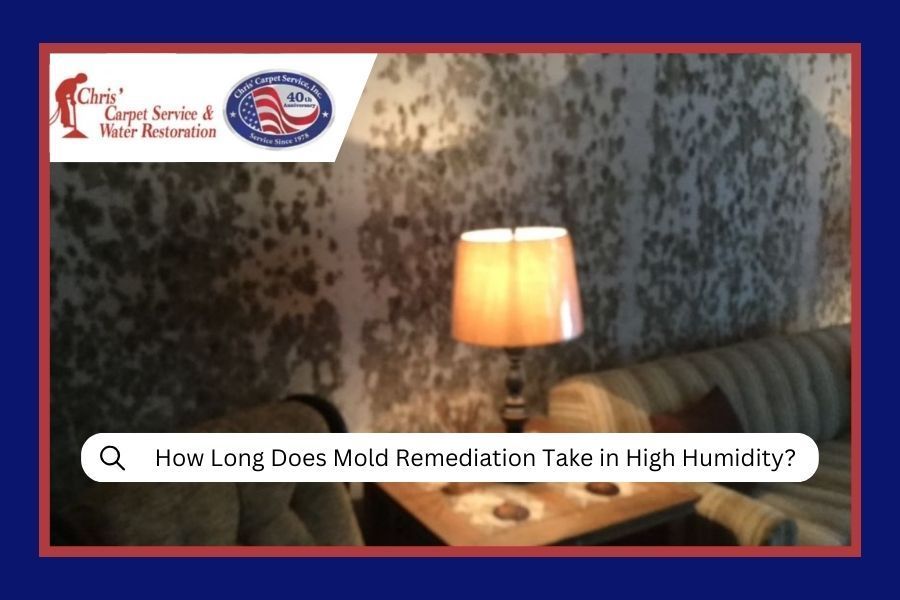
How Long Does Mold Remediation Take in High Humidity?
Most professional mold remediation projects in Tampa Bay take between one and five days to complete. However, Florida's high humidity can extend that timeline significantly. Our team at Chris' Carpet Service & Water Restoration has been handling mold problems across the Tampa Bay Area since 1976, and we've learned that giving homeowners realistic expectations matters more than telling them what they want to hear.
The honest answer? It depends. A small patch of mold in a bathroom might wrap up in a single day. A whole-house issue triggered by hurricane flooding could take a week or longer. Let's break down what actually determines how long you'll be dealing with this.
What Does a Typical Mold Remediation Timeline Look Like?
Small, contained mold problems typically take one to three days. We're talking about visible growth in a single room, maybe under a sink or around a window. The affected area is limited, and there's no hidden spread behind walls.
Medium projects run three to five days. These involve multiple rooms, mold that's penetrated drywall or flooring, or situations where containment barriers protect the rest of your home.
Large or complex jobs can take a week or more. This includes whole-house contamination, mold in HVAC systems, or cases where additional growth is discovered once we open up walls.
Concerned About Mold in Your Home?
Our IICRC-certified technicians can assess your situation and give you an honest timeline estimate. We've been serving Tampa Bay homeowners for nearly 50 years.
Get Your Free EstimateWhy Does Florida Humidity Make Mold Removal Take Longer?
Here's the thing about living in Tampa Bay: the outdoor humidity fights against everything we're trying to accomplish indoors. Mold needs moisture to survive, and our climate delivers that in abundance.
According to the Environmental Protection Agency, indoor humidity should stay below 60% to prevent mold growth. During a typical Florida summer, outdoor humidity regularly exceeds 80%. That moisture constantly tries to sneak back into your home.
What this means for remediation timelines:
- Drying takes longer. After we remove contaminated materials, everything needs to dry completely before reconstruction. High ambient humidity slows this process considerably.
- Dehumidifiers work overtime. We run commercial dehumidification equipment around the clock, but fighting against Florida's moisture levels is a constant battle.
- Air quality verification may require extra time. We don't consider a job complete until moisture readings confirm the environment won't support regrowth.
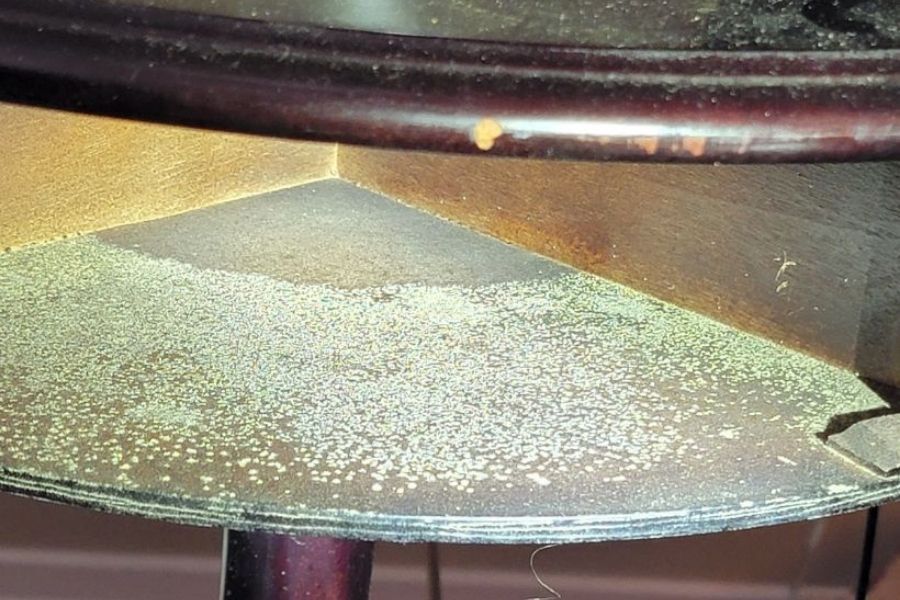
Florida's humidity can cause mold to spread quickly onto furniture and personal belongings if moisture isn't controlled promptly.
Factors That Directly Affect Your Mold Remediation Timeline
Every mold situation is different. Some factors speed things up. Others slow everything down. Here's what our IICRC-certified technicians consider when estimating your project timeline.
| Factor | Shorter Timeline | Longer Timeline |
|---|---|---|
| Size of affected area | Under 10 square feet | Multiple rooms or whole house |
| Location of mold | Visible surfaces only | Behind walls, in HVAC, under flooring |
| Type of materials | Non-porous (tile, glass) | Porous (drywall, carpet, wood) |
| Water source status | Already fixed | Still active or unknown |
| Current humidity levels | Below 60% indoors | Above 60% indoors |
The Water Source Question
Mold doesn't just appear randomly. There's always a moisture source feeding it. Maybe a slow leak under the bathroom sink. Perhaps an AC unit that's been dripping into the wall cavity for months. Could be water damage from a storm or flood that wasn't dried properly.
If we don't identify and stop that moisture source first, remediation becomes pointless. The mold will return, and you'll be right back where you started. Sometimes finding the source adds time to the project, but skipping this step would be doing you a disservice.
Hidden Mold Extends Everything
What you can see is rarely the whole story. That small patch of mold on your wall? It might be the tip of the iceberg. Once we start investigating, we often find growth has spread inside wall cavities or beneath flooring.
These discoveries aren't setbacks. They're necessary findings that prevent recurring problems. Check out how we handled a hidden mold situation in a Clearwater home to see what this looks like in practice.
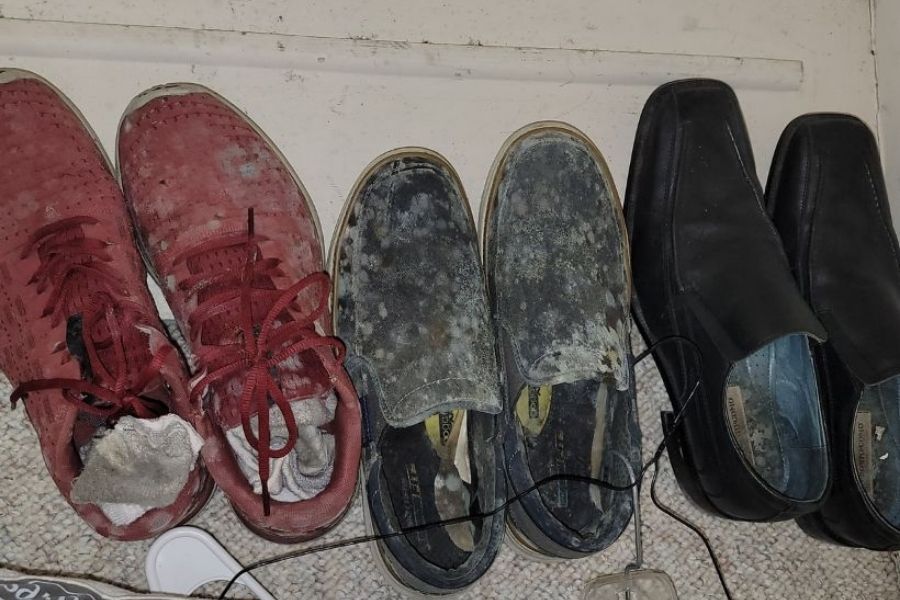
Personal belongings like shoes can develop mold growth quickly in humid Florida conditions, especially in closets with poor ventilation.
What Happens During the Mold Remediation Process?
Understanding the steps helps explain why quality remediation takes time. Rushing any phase leads to incomplete removal and eventual regrowth.
The Mold Remediation Process
Step 1
Assessment
Identify all affected areas and locate the moisture source
Step 2
Containment
Seal off affected areas to prevent spore spread
Step 3
Air Filtration
HEPA air scrubbers capture airborne mold spores
Step 4
Removal
Remove contaminated materials and clean salvageable surfaces
Step 5
Drying
Dehumidification until moisture levels are safe
Step 6
Verification
Confirm safe moisture readings before completion
The drying phase is where Florida's climate really shows up. According to IICRC standards, materials must reach specific moisture content levels before a job is complete. In our humid environment, this takes longer than in drier climates.
What Can You Do to Speed Things Up?
While you can't control the weather, some factors are within your control:
- Run your AC to keep indoor humidity down before and during remediation
- Fix any known water leaks immediately
- Provide clear access to affected areas by moving furniture
- Make decisions quickly about what items to save versus discard
Curious about costs? We've written about insurance coverage for mold removal in Florida that breaks down typical scenarios.
The Bottom Line on Mold Remediation Timelines
In Tampa Bay's humid climate, expect mold remediation to take one to five days for most residential projects. Larger situations may require a week or longer. The key factors are size of the affected area, where mold is located, what materials are involved, and how quickly we can control humidity.
Rushing the process leads to problems. At Chris' Carpet Service & Water Restoration, we'd rather take an extra day to do things right than leave you dealing with the same issue six months later.
If you've discovered mold in your Tampa or Tampa Bay Area home, contact our team for a free assessment. We'll give you an honest timeline based on your specific situation.
Frequently Asked Questions
Can I stay in my home during mold remediation?
For small, contained projects in one room, you can often stay home. Larger jobs involving multiple rooms or HVAC contamination may require temporary relocation. We'll let you know during the assessment whether staying elsewhere is recommended.
Why does mold remediation take longer in summer months?
Summer brings the highest humidity to Tampa Bay, often exceeding 80% outdoors. This makes drying more challenging because moisture constantly tries to re-enter the treated space. Achieving safe moisture levels takes longer when outdoor air is saturated.
How do I know if the mold remediation was successful?
Successful remediation means safe moisture readings in all materials, complete removal of visible growth, and no musty odors remaining. We verify moisture content with professional meters before considering any job complete.
Will the mold come back after remediation?
Mold can return if the original moisture source isn't fixed or humidity stays high. That's why we prioritize finding and fixing the water source first. After remediation, keeping indoor humidity below 60% is the best prevention.