

Bathroom Water Damage in St Petersburg - Beyond the Obvious Leaks
Most bathroom water damage starts in a spot you never look at. A cracked grout joint, a tired toilet seal, a supply hose nobody has checked in years. Our team at Chris' Carpet Service & Water Restoration has handled bathroom water damage restoration across Pinellas County since 1976, and the call almost never starts with a burst pipe.
Burst pipes are the easy ones. It's the slow stuff that quietly eats a floor for a year.
Why Bathroom Leaks Hide So Well
A bathroom is the one room where water on the floor looks completely normal. Wet tile, a damp mat, fog on the mirror. None of it raises an eyebrow, so a real leak blends into the everyday splashing. By the time a musty smell arrives, the wood under that tile has been soaked for months.
Local construction helps it hide. Most homes here sit on a concrete slab, so there is no crawl space and nowhere for a drip to fall.
Water has one direction left. Sideways.
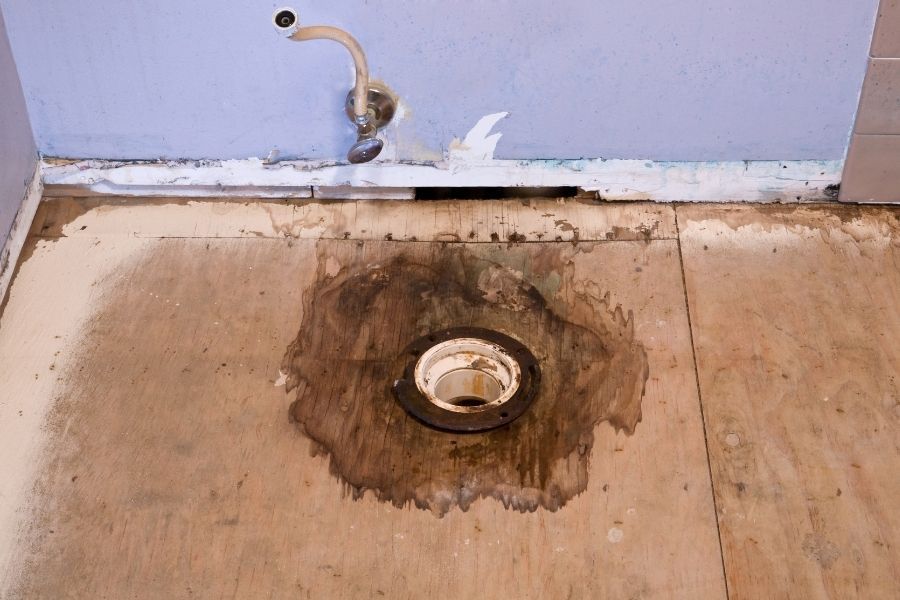
Baseboard swelling beside the tub is usually the first clue, and the subfloor is already wet.
Which is why the worst of it turns up in the next room. Tile looks perfect. The bedroom carpet along that shared wall is soaked.
What Causes Bathroom Water Damage Beyond the Obvious Leaks?
Four quiet failures cause most of the bathroom damage we see. Caulk and grout, toilet seals, sink supply lines, and the plain old splash-out that gets past a shower curtain. None of them flood a room in an afternoon. They seep for weeks behind something solid, and that patience is what makes them expensive.
Caulk and Grout That Gave Up
Grout is not waterproof. It never was. The real barrier sits under the tile, so once grout cracks or the caulk at the tub pulls loose, water slips right past both. Regular tile and grout cleaning keeps those joints easy to read.
Toilet Seals and Flanges
The wax ring under your toilet is the only thing between the bowl and the floor drain. Then water escapes with every flush. A toilet that rocks even slightly is the tell. Our post on water damage from leaky toilets covers the rest.
Supply Lines Under the Sink
Braided hoses and shut-off valves live in a dark cabinet nobody opens. That drip runs for months into the vanity base. Most leaks under the bathroom sink announce themselves with a swollen cabinet bottom.
Splash-Out and Overflow Gaskets
Water past the curtain soaks the seam where flooring meets tub. The overflow gasket is sneakier. It only leaks when the tub gets filled high. Here is how shower and tub leaks become structural repairs.
| Hour 1 | Hour 24 | Day 7 |
| Water reaches drywall and subfloor | Mold can start | Baseboard swells, tile loosens |
How Does Florida Humidity Make Bathroom Water Damage Worse?
Warm, wet air turns a small bathroom leak into a mold problem fast. The EPA guide to mold and moisture notes that mold can take hold on damp material within 24 to 48 hours. Now add August air. Then a bath fan venting into the attic.
You get a ceiling stain that looks exactly like a roof leak. Plenty of older bathrooms here have no working fan, so steam sits on the drywall over the shower until it grows enough mold to need professional mold remediation.
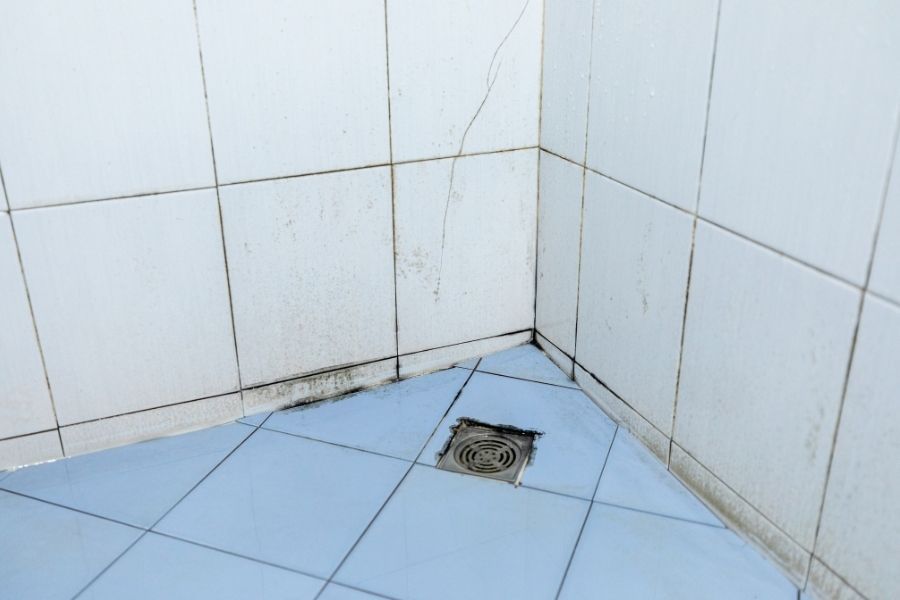
Ceiling mold above a shower usually points to a weak exhaust fan rather than a roof problem.
We check the fan on every job. If it vents into the attic instead of outside, drying the room fixes nothing at all.
What Are the Warning Signs of Hidden Bathroom Water Damage?
Trust your nose and your feet before your eyes. A musty smell that returns after cleaning, plus a floor that gives near the tub, both point to water sitting inside the structure. Stains show up last, not first.
| What You Notice | What It Usually Means |
|---|---|
| Musty smell that keeps returning | Moisture trapped in a wall or subfloor |
| Grout darkening at the toilet base | The wax seal or flange is leaking |
| Paint peeling on the far side of the wall | Water is tracking out of the room |
Spot any two together and it's worth opening a small area to look.
How Do the Pros Dry a Bathroom the Right Way?
Drying a bathroom means drying what sits behind the tile. We work to the IICRC S500 standard, which spells out how moisture gets measured, tracked, and proven dry. A box fan in the doorway will not get you there.
- Shut off the water at the source.
- Map every wet material with moisture meters and a thermal camera.
- Pull only what cannot be saved, like soaked baseboard and drywall.
- Push dry air into the wall cavity and under the flooring using mats and air movers.
- Log readings daily until materials hit a dry standard.
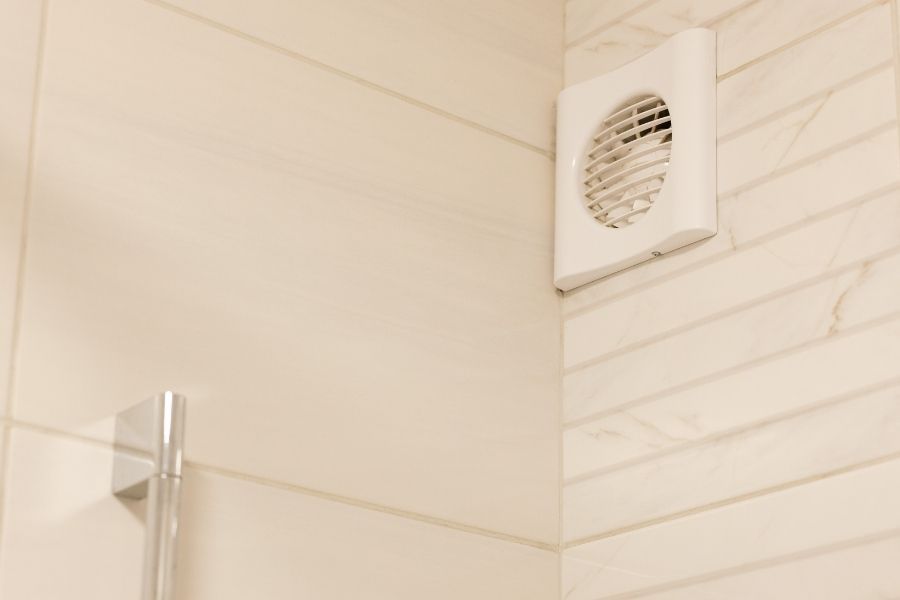
An exhaust fan that vents into the attic instead of outside just moves the humidity problem somewhere you cannot see it.
All of it lands in Xactimate, the same software your adjuster uses. That shortens the claim conversation.
How Can You Prevent Bathroom Water Damage?
Ten minutes twice a year prevents most of what we get called out for. Re-caulk before the gap widens. Open the vanity, run a hand along the lines, and check whether the toilet moves.
- Re-caulk the tub and shower joint yearly
- Feel under the sink for damp spots
- Push on the toilet, since rocking means a failing seal
- Run the fan 20 minutes after a shower
- Swap braided supply hoses every five to seven years
Spot something? Please do not wait for a stain to spread. We handle water damage restoration in St. Petersburg around the clock, we are family owned and women owned, and estimates are free.
Frequently Asked Questions
Does homeowners insurance cover bathroom water damage in Florida?
Usually yes when the leak was sudden, like a failed supply line or an overflowing toilet. Seepage that ran for months often gets denied as a maintenance problem. We document everything in Xactimate.
Can I dry a bathroom myself with a fan and a store dehumidifier?
For a splash on tile you caught the same day, sure. Once water gets under the tile bed or inside a wall, rental gear cannot reach it. Damage continues while the surface looks dry.
How long does it take to dry a bathroom after water damage?
Three to five days is typical. Tile set over a thick mortar bed can add a couple more, because that material holds water like a sponge. We stop when the meters say dry.
The tile still looks fine, so is my floor okay?
Tile shrugs off water. That is what makes it so misleading. Plywood, mortar bed, and the wall cavity do not. A flawless floor can sit on a subfloor that is coming apart.