
Water Damage Restoration Equipment - What Companies Use
Water damage restoration equipment falls into five buckets: extraction units, air movers, dehumidifiers, air scrubbers, and moisture detection tools. Our IICRC certified crew at Chris' Carpet Service & Water Restoration has been hauling this gear into Tampa Bay homes since 1976. Here's a plain look at what each piece does, and why the right mix matters.
What Equipment Do Restoration Companies Use?
Every water loss gets its own equipment package. A soaked hallway needs a fraction of what a whole flooded first floor needs. Sizing the gear right matters more than owning the biggest machine on the truck. Too little equipment and drying stalls out.
Think of it like a kitchen. A chef doesn't cook everything in one pan, and we don't show up with a single fan and hope for the best.
| Equipment | What It Does |
|---|---|
| Truck mount and portable extractors | Pull standing water out of carpet, pad, and hard floors |
| Air movers | Push air across wet surfaces to speed evaporation |
| LGR and desiccant dehumidifiers | Strip water vapor back out of the room air |
| HEPA air scrubbers | Filter spores and dust kicked loose during the work |
| Moisture meters and thermal cameras | Map wet areas and prove when materials are dry |
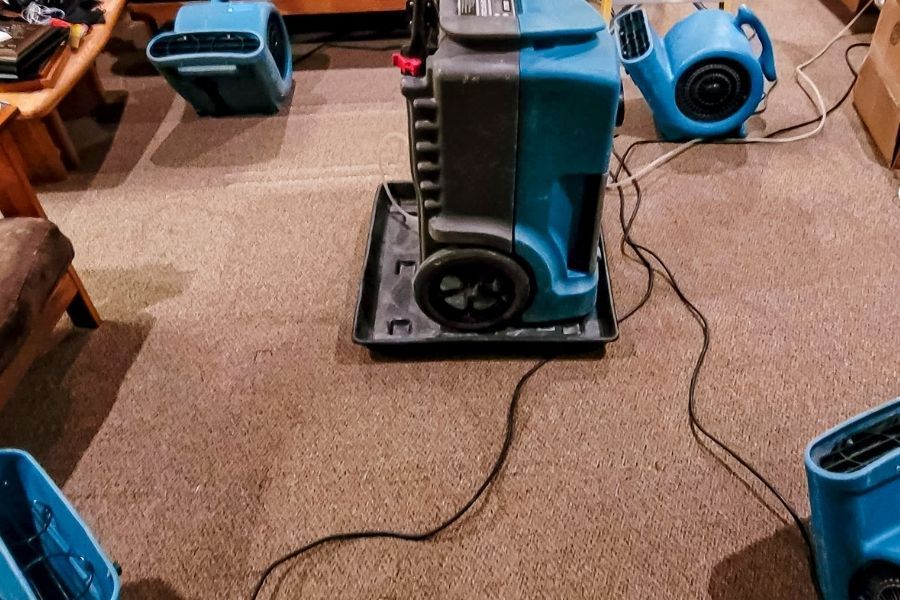
Air movers get spaced along the wet edge of a room and angled low, so air sweeps the surface instead of bouncing off it.
How Air Movers and Dehumidifiers Work Together
Air movers lift moisture out of wet materials, and dehumidifiers pull that moisture out of the air. Run one without the other and drying grinds to a halt. Water evaporates, fills the room, then soaks straight back into your baseboards and drywall. The two only work as a pair.
Florida makes this harder. Outdoor air here is already soaked, so opening windows works against us.
So we close the space up, dry the air with machines, and hold humidity down. The EPA recommends keeping indoor humidity below 60 percent. Miss that window and a water job turns into a job for professional mold remediation instead.
| 1 | Remove the bulk water first. Extraction beats evaporation every time. |
| 2 | Move air across every wet surface so trapped moisture releases. |
| 3 | Dry the air, so that released vapor has somewhere to go. |
| 4 | Measure daily and adjust, because guessing is how mold starts. |
Tools That Find Water You Cannot See
The equipment that matters most is often the smallest: meters and cameras that show where water traveled. Water runs sideways under baseboards, wicks up drywall, and hides beneath cabinet toe kicks. What you can see is rarely the whole loss. Detection tools turn guesswork into a map.
- Pin and pinless moisture meters read how wet wood, drywall, and tile really are.
- Thermo hygrometers track temperature and humidity as drying progresses.
- Infrared cameras show cool, damp patches behind walls without cutting anything open.
- Borescopes peek inside a wall cavity through a tiny hole.
This is also how we avoid tearing out material that could have been saved. Sometimes a wall dries in place. Our guide on spotting hidden house water damage covers the warning signs you can check yourself.
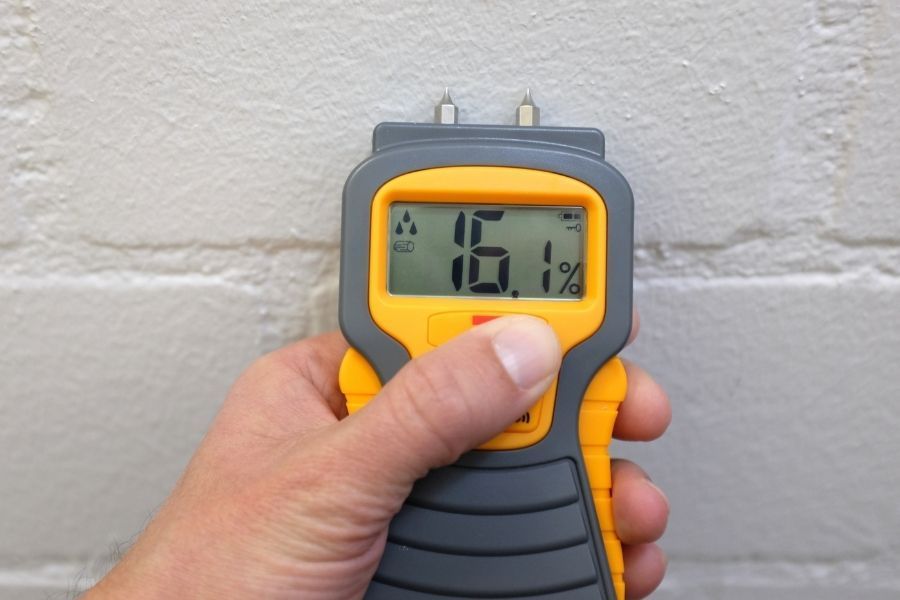
Readings get logged in the same spots every visit, which turns a hunch into paperwork an adjuster can use.
Why Not Just Use a Shop Vac and Box Fans?
Household tools handle small spills, but they cannot dry a structure. A box fan moves a fraction of the air a commercial air mover does. A home dehumidifier pulls a few pints a day. A low grain refrigerant unit pulls many times that.
Scale is the whole difference.
When Cleaning It Up Yourself Makes Sense
- Clean water from a supply line or a spilled bucket.
- A small area, roughly under 10 square feet.
- Hard surface flooring with nothing wet underneath.
- You caught it within minutes, not hours.
When You Need Professional Equipment
- Water reached carpet pad, drywall, insulation, or cabinets.
- Anything involving sewage, a washing machine hose, or storm water.
- The water sat overnight or longer.
- You need the drying documented for an insurance claim.
The IICRC S500 standard spells out how structural drying gets measured and verified. It's the reason we take readings instead of eyeballing a room. Curious about timelines? See how long water damage takes to dry.
What a Drying Setup Looks Like in Your Home
A typical setup means extraction on day one, equipment placed and running, then daily checks until the numbers hit target. Most jobs take three to five days of drying. Bigger losses run longer. Yes, the machines stay on overnight.
- We inspect, take baseline readings, and find the full footprint of the water.
- Standing water comes out, along with wet pad or ruined material.
- Air movers and dehumidifiers get placed based on wet square footage, not on room count.
- We return daily, log readings, and pull equipment as areas dry.
Homeowners always ask if they can stay put. Usually yes. We cover that in our piece on staying in your home during restoration. Same gear, same process, whether we're in Largo, Seminole, or handling water damage restoration in Tampa.
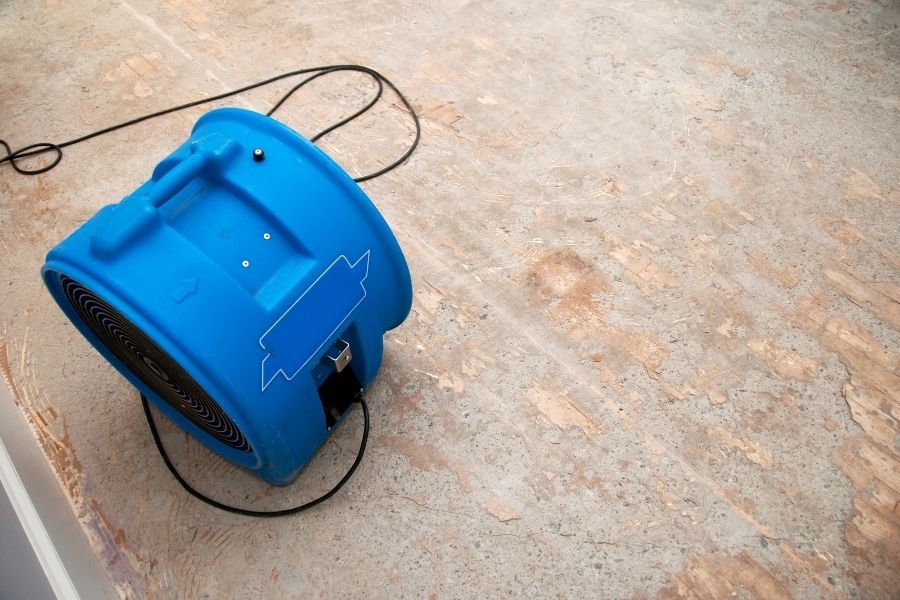
Once wet flooring comes out, the subfloor gets its own drying time. New flooring over damp plywood is a callback waiting to happen.
Restoration Equipment FAQs
How many air movers does one room need?
It depends on wet square footage and how many wet walls there are, not on room size alone. A small bathroom might take two. A soaked living room can take six or more, plus a dehumidifier sized to match that airflow.
Do I have to pay for the electricity the equipment uses?
Drying equipment does add to your power bill. Many policies cover that cost as part of the claim, so save your statement. We log equipment run times in your file for the adjuster.
Can I turn the machines off at night?
Please don't. Drying works on nonstop evaporation. Eight hours off can undo a full day of progress. If the noise is a problem, tell us and we'll move units around.
What tells you the drying is finished?
Moisture readings, not the calendar. We compare wet materials against a dry spot elsewhere in your home. Equipment comes out once the readings match, and that final set of numbers goes into your file.