Condo Water Damage in Tampa Bay - Who Pays for What?
In a Florida condo, the association usually pays to fix the building, and you pay for what makes your unit yours. Think floors, paint, cabinets, and the couch. Our IICRC certified team at Chris' Carpet Service & Water Restoration handles condo water damage restoration all over Tampa Bay. We see this split play out a lot.
Real life gets messier, though. Whose pipe was it? Was it a plumbing leak, wind driven rain, or rising water from a storm? Here's how the bill usually gets split, and how to keep a leak from turning into a feud with your neighbors.
Quick note: we're restoration pros, not lawyers, so your condo documents and your policies always get the final word.
Who Pays for Condo Water Damage in Florida?
Florida splits condo coverage into two layers: the association's master policy and your own HO-6 policy. Under Chapter 718 of the Florida Statutes, the association insures the building as it was first built. You insure the finishes, fixtures, appliances, and belongings inside your unit.
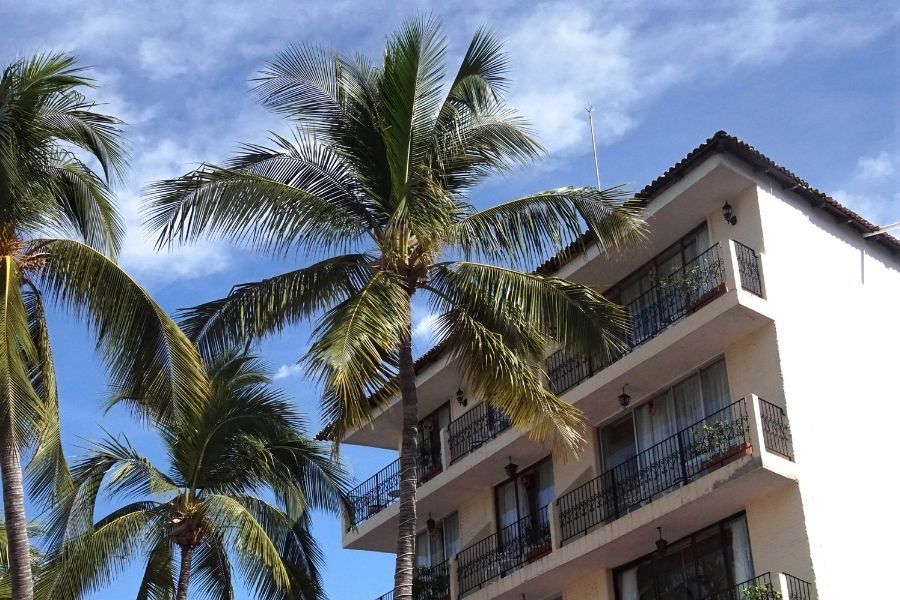
Shared walls, a shared roof, shared plumbing. That’s why condo water damage gets complicated so fast around here.
Picture your unit as a bare concrete box. The association covers the box, the roof, the halls, and the drywall. You cover the carpet, the tile, the kitchen, and the couch your cat already ruined.
Here's the usual breakdown:
| What Got Wet | Who Usually Covers It | Good to Know |
|---|---|---|
| Roof, outside walls, halls, lobby | Master policy | Shared by all owners |
| Drywall and structure in your unit | Master policy | As first built |
| Flooring, paint, wallpaper | Your HO-6 | Upgrades too |
| Cabinets, counters, fixtures | Your HO-6 | Even original ones |
| Appliances, water heater | Your HO-6 | If they serve only you |
| Furniture, clothes, electronics | Your HO-6 | Your personal property |
| Rising flood water | Flood insurance only | Not in standard policies |
What Does the Condo Association's Master Policy Cover?
The master policy covers the condo as it was first built, including common areas and the basic structure of each unit. That means roofs, outside walls, halls, shared pipes, and in most cases the drywall inside your unit. Those repairs are a shared cost for all owners.
Here's the catch. Master policies often have large hurricane deductibles. Any loss under that amount still gets paid, usually by the owners through the budget or a special assessment.
Also, who maintains something isn't always who insures it. Many declarations make owners handle their own AC, water heater, and the pipes that serve only their unit. If your water heater dies, the new tank is on you.
What Should Your HO-6 Policy Cover?
Your HO-6 policy, sometimes called walls in coverage, should pick up everything the master policy leaves out. That includes flooring, paint, cabinets, counters, appliances, and your stuff. It should also carry liability coverage in case water from your unit damages a neighbor's.
Upgrades Count Too
Swapped the builder's carpet for luxury vinyl? Added quartz counters? Those upgrades are on your side of the line, so make sure your limits match your unit today.
Loss Assessment and Loss of Use
Loss assessment coverage helps when the association bills every owner for a shared loss, like a storm deductible. Loss of use coverage helps pay for a place to stay if your unit isn't livable during drying. Ask your agent about both. It's a short call that can save you a long month.
What If the Leak Came From Another Unit?
When water comes from a neighbor's unit, each owner's HO-6 usually covers their own finishes and belongings, and the master policy covers the structure. The big exception is negligence. If someone ignored a known leak or broke the rules, Florida law makes them pay the repair costs insurance doesn't.
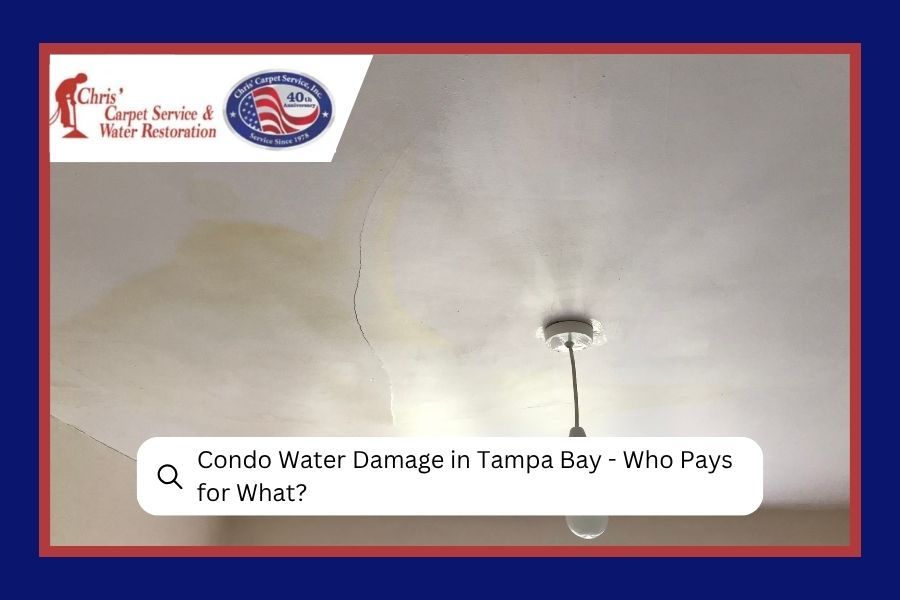
This is where tempers run hot. The owner below has a soggy ceiling, the owner above feels awful, and everyone wants one name to blame. Usually, the bill gets split several ways.
Slow leaks cause the biggest fights, since nobody notices until it's too late. Our guide to spotting hidden water damage in condos covers the early signs.
The unit above has a burst supply line
Your AC drain line clogs and overflows
Rain blows in through the roof or an outside wall
The shared drain stack backs up into your tub
Storm surge floods the ground floor
Is Storm and Flood Damage Covered in a Tampa Bay Condo?
Damage from rising water, like storm surge or a flooded street, is usually excluded from both the master policy and your HO-6. Flood needs its own policy. It comes from the National Flood Insurance Program or a private carrier, and both associations and owners can buy it.
Wind is a different story. If a storm tears off roofing or breaks a window and rain pours in, that's often treated as wind damage, not flood. Adjusters care about that difference, so photograph exactly where the water came in.
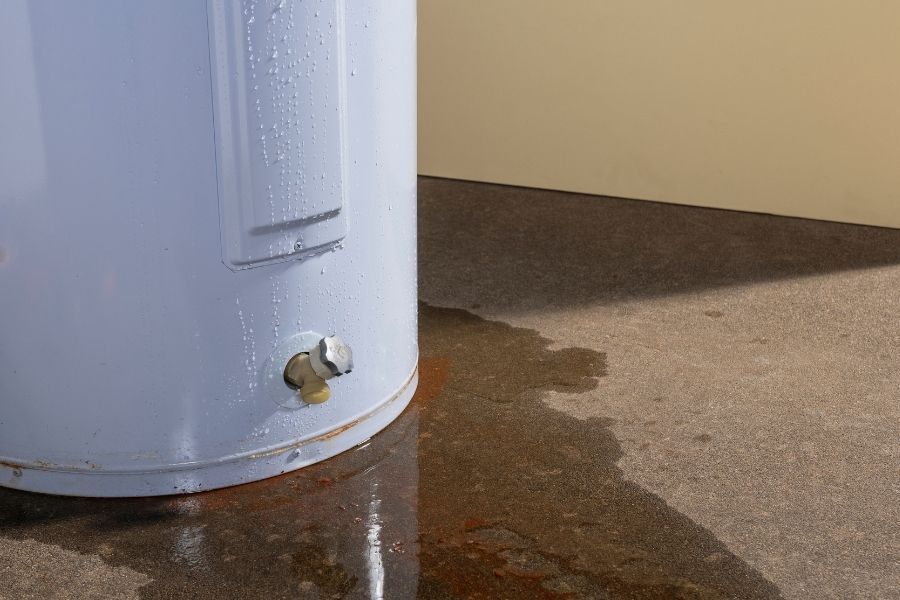
Florida condo law leaves water heaters out of the association’s coverage, so a failed tank inside your unit usually falls on you.
After Hurricane Milton, our flood damage restoration crew dried out a Largo condo where storm water had crept under the tile. The floor looked fine. It wasn't.
Living on the eighth floor doesn't make you flood proof, either. A surge can wreck the lobby and garage, and the association may assess every owner. Our post on water damage vs. flood damage coverage goes deeper on where one ends and the other begins.
What Should Condo Owners Do in the First 24 Hours?
Stop the water, tell the association in writing, document everything, and start drying right away. Who pays gets sorted out later. Your policy expects you to limit further damage. Plus, the EPA's mold and moisture guide says wet materials should dry within 24 to 48 hours to prevent mold.
- Shut off the water at the fixture or your unit's valve. Call maintenance if it's coming from above.
- Call the association manager, then follow up in writing with the date, time, and what you saw.
- Photograph the source, ceilings, floors, and damaged belongings before anything moves.
- Call your HO-6 insurer to open a claim.
- Get a pro drying the unit. Box fans can't reach water inside walls or under floors.
- Keep every receipt, and don't toss anything until it's photographed and the adjuster okays it.
Adjusters can be picky about proof. Our guide to documenting water damage for insurance claims shows what they look for.
The master policy and your HO-6 cover different pieces of the same leak, so read both before you file anything.
Here's where we come in. We pull out the water, set up drying gear, remove wet materials that can't be saved, and track moisture until it's truly dry. Our estimates are written in Xactimate, the software many adjusters use, so the paperwork stays clean. We don't do rebuilds, but we're happy to point you to contractors we trust.
Frequently Asked Questions About Condo Water Damage
Can my condo association charge me for its insurance deductible?
Usually not on its own. Florida treats the master policy deductible as a shared expense for all owners. The exception is damage caused by an owner's carelessness, intentional act, or rule violation, and then that owner can be billed for whatever insurance didn't cover.
Who pays for mold after a condo water leak?
It depends on why the mold grew. Mold from a sudden, covered leak is often handled with that claim, though many policies cap mold coverage. Insurers rarely pay for mold that grew while a slow leak went unfixed, so fast drying protects you.
Will my HO-6 pay if my leak damages the unit below?
It might. The liability part of your HO-6 can pay for a neighbor's damage if you're found responsible, like a washer hose you knew was cracked. If nobody was careless, your neighbor's own policy and the master policy usually handle their side.
How long does it take to dry out a condo after a leak?
Most condo units need three to five days of professional drying. Water trapped under tile or inside a concrete slab can take longer, since dense materials give up moisture slowly. We check daily and run the equipment until the readings say it's dry.