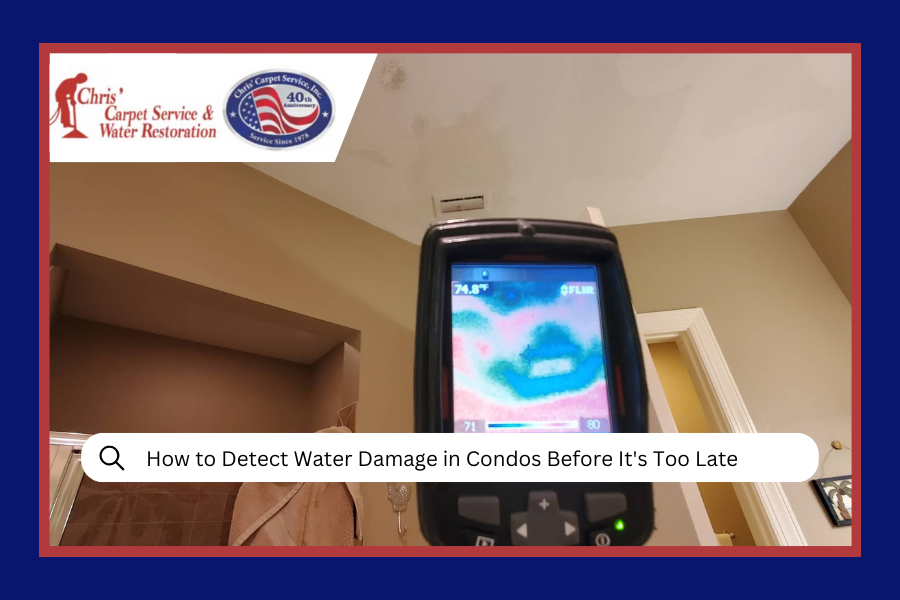
How to Detect Water Damage in Condos Before It's Too Late
Jump to Section:
Living in a Tampa Bay condo means you're not just responsible for your own unit. You're connected to neighbors above, below, and on all sides. Water damage doesn't respect property lines, and what starts as a small leak upstairs can quickly become your problem downstairs.
At Chris' Carpet Service & Water Restoration, we've handled countless water damage restoration emergencies in Tampa Bay condos. A slow leak goes unnoticed for weeks or even months. By the time someone spots the damage, mold is growing behind walls and repair costs have skyrocketed from a few hundred dollars to several thousand.
The good news? Most water damage gives you warning signs before it becomes a disaster. You just need to know what to look for.
Why Condos Face Unique Water Damage Risks
Your condo is different from a single-family home, and that creates some specific challenges.
You share plumbing systems with your neighbors. One unit's leaky pipe can affect three or four other units. We've responded to emergencies where a toilet supply line burst in a third-floor unit and damaged five condos below it within hours.
Common areas create blind spots. Shared walls, ceilings, and mechanical spaces are harder to inspect. You can't just pop into the crawl space or check the attic whenever you want, and by the time damage becomes visible in your unit, it's often been developing for a while.
HOA involvement complicates response times. Even when you spot a problem, getting approval to address shared infrastructure can delay critical repairs. Those delays cost you money and increase damage severity.
Early Warning Signs Tampa Bay Condo Owners Need to Watch
Catching water damage early can save you thousands. Here are the red flags that should get your attention immediately.
Visual Clues That Water Is Where It Shouldn't Be
Discoloration on walls or ceilings is never normal. Yellow or brown stains mean water has been sitting there long enough to leave a mark. Even small spots deserve investigation because they often indicate bigger problems hiding behind drywall.
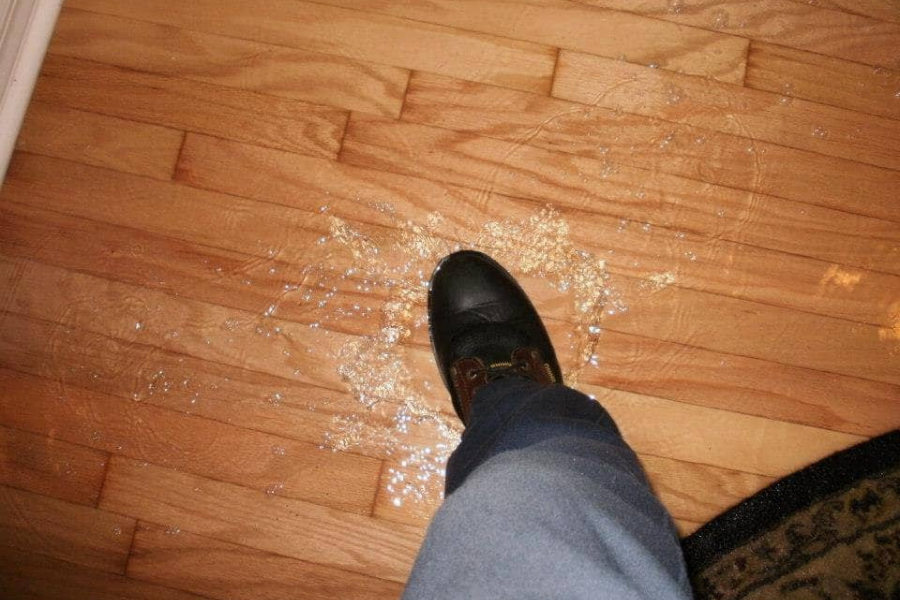
Standing water from a condo leak can quickly spread through porous materials and into neighboring units if not addressed immediately.
Peeling paint or bubbling wallpaper signals moisture trapped beneath the surface. Paint is designed to stick to dry surfaces, so when it starts lifting or bubbling, water is breaking that bond. This happens most often near windows, under air conditioning units, and along exterior walls.
Warped flooring tells you water has soaked into the subfloor. Laminate starts lifting at the edges. Tile grout develops cracks. Hardwood begins cupping or crowning. Florida's humidity makes this worse because our materials are constantly expanding and contracting, so visible warping means serious moisture exposure.
Smell and Sound: Your Other Early Detection Tools
Musty odors are one of the most reliable indicators. Your nose knows mold before your eyes do. That damp, earthy smell means mold is growing somewhere, even if you can't see it yet. Common hiding spots include inside AC units, under sinks, and in closets against exterior walls.
Dripping or running water sounds when everything should be quiet is a clear problem. At Chris' Carpet Service & Water Restoration, we tell homeowners to do the "midnight test." Turn off all water fixtures before bed and listen. If you hear water running or dripping, you've got a leak that needs immediate attention.
⚠️ Quick Reference: Water Damage Red Flags
👁️ VISUAL
• Ceiling/wall stains
• Peeling paint
• Warped floors
• Soft drywall
👃 SMELL
• Musty odors
• Earthy scent
• Damp smell
• Mildew presence
👂 SOUND
• Dripping water
• Running water
• Hissing pipes
• Unusual noise
Pro Tip: If you notice any TWO of these signs in the same area, call a professional immediately. Multiple indicators mean active water damage.
Hidden Signs That Require a Closer Look
Higher than normal water bills often reveal slow leaks. If your water usage jumps without explanation, you're losing water somewhere. Track your bills monthly and investigate any increases over 20%.
Condensation on windows year-round isn't just annoying, it indicates excessive indoor humidity. While Tampa Bay summers are humid, proper AC and ventilation should keep indoor humidity between 30-50%. Constant condensation suggests moisture problems that can lead to mold growth.
Soft spots in drywall or flooring feel spongy when you press on them. This means the material has absorbed so much water it's losing structural integrity. Don't ignore soft spots, they're typically the result of long-term water exposure.
Notice any of these warning signs in your condo?
Don't wait for the damage to spread. At Chris' Carpet Service & Water Restoration, our IICRC-certified technicians respond to Tampa Bay water emergencies 24/7. We'll assess the damage, work with your insurance, and start mitigation immediately.
Call (727) 888-5111 NowYour Condo Water Damage Inspection Checklist
Use this monthly checklist to catch problems early. Spend 15 minutes checking these areas, and you'll spot most issues before they become expensive repairs.
| Area to Check | What to Look For | Frequency |
|---|---|---|
| Bathroom | Standing water under sinks, soft flooring, ceiling stains, caulking gaps | Monthly |
| Kitchen | Cabinet moisture, dishwasher leaks, refrigerator line, disposal drips | Monthly |
| Living Areas | Window condensation, AC vent rust, wall discoloration, musty closets | Monthly |
| Balcony | Door track water, drain clogs, weather stripping, ceiling stains | After storms |
| Utility Spaces | Water heater rust, AC drip pan, washer hoses, pipe corrosion | Monthly |
Tampa Bay's frequent afternoon storms make balcony drainage especially important. A clogged balcony drain can send water into your unit within minutes during heavy rain. Check yours monthly and after major storms.
What to Do When You Spot Water Damage
Speed matters more than anything else. According to EPA guidelines, mold can begin growing within 24 to 48 hours of water exposure. That means you have a very short window to prevent secondary damage.
Document everything immediately with photos and video. This protects you when filing insurance claims and provides evidence if the damage originated from a neighbor's unit or common area. Include timestamps and multiple angles.
Contact your HOA right away if the source involves shared infrastructure. Many associations have emergency protocols and preferred vendors. Some even have insurance that covers multi-unit incidents, but you need to follow their reporting procedures to access that coverage.
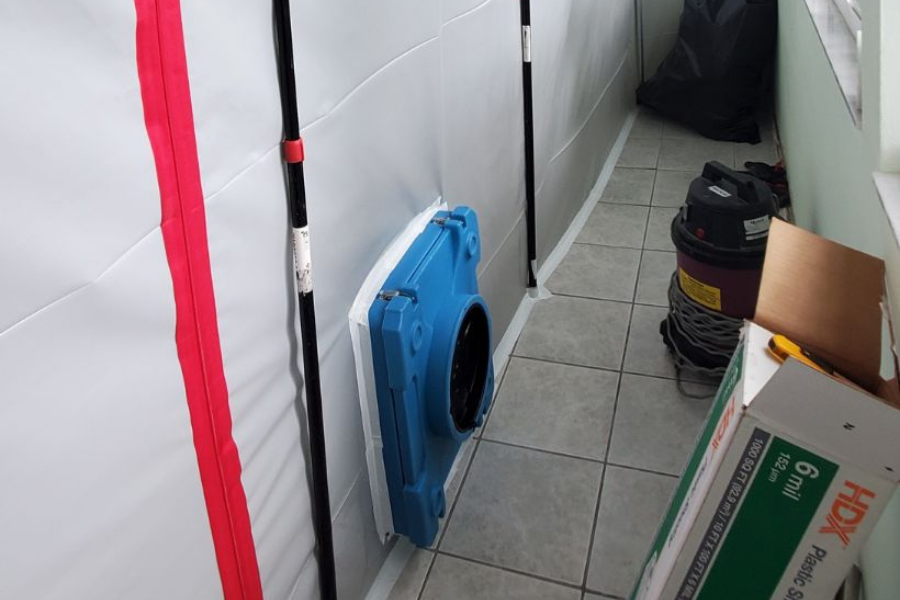
Professional containment barriers and air scrubbers prevent water damage and mold spores from spreading to other units in your condo building.
Call flood damage restoration professionals who understand condo complexes. We work with HOAs regularly and know how to navigate the unique challenges of multi-unit buildings. Our team coordinates with property managers, handles documentation, and works with multiple insurance policies when damage affects several units.
Stop the water source if safe to do so. Turn off water supply to leaking fixtures. Place towels to contain spreading water. Move furniture and belongings away from wet areas. But don't delay calling professionals, especially if you're dealing with Category 2 (grey water) or Category 3 (black water) contamination.
Don't attempt major remediation yourself. Staying in your condo during water damage restoration depends on the extent of damage, but professional equipment is essential for proper drying. Fans and dehumidifiers from the hardware store can't reach the moisture trapped in wall cavities and subfloors where mold takes hold.
Understanding Your Insurance Coverage
Most condo owners have two insurance policies at play. Your HO-6 policy covers your unit's interior, personal property, and improvements you've made. The HOA master policy covers building structure, common areas, and shared systems.
| Coverage Type | What It Covers | Who Pays |
|---|---|---|
| HO-6 (Your Policy) | Interior walls, flooring, cabinets, personal property, improvements | You |
| HOA Master Policy | Building structure, exterior, common areas, shared plumbing/electrical | HOA (divided among owners) |
| Liability Coverage | Damage your unit causes to neighbors, legal costs | You (if negligent) |
Determining which policy applies gets complicated when water crosses unit boundaries. We've handled cases where a leak originated in a shared wall, traveled through three units, and required claims against both the HOA policy and individual unit policies. This is why documentation and professional assessment matter so much.
Water damage insurance claims typically cover sudden and accidental damage but exclude gradual deterioration. A burst pipe is covered. A slow leak that developed over months because you ignored maintenance might not be. This is another reason why monthly inspections are so important.
Deductibles on condo policies often differ from single-family homes, and your HOA may have a substantial deductible that gets divided among affected unit owners in some situations. Understanding these details before you have a claim saves major headaches during an emergency.
The Real Cost of Waiting
We see the financial impact of delayed response constantly. A small leak under a kitchen sink that goes unnoticed for two months can require extensive remediation costing $8,000 to $15,000 when you factor in drywall replacement, mold treatment, and cabinet reconstruction.
Common water damage mistakes include assuming a problem will dry on its own, thinking surface drying means the structure is dry, and delaying professional assessment to "save money." These decisions consistently lead to higher costs and more extensive damage.
Health risks compound over time. According to the CDC, exposure to damp and moldy environments may cause nasal stuffiness, throat irritation, coughing, wheezing, and eye or skin irritation. People with mold allergies or compromised immune systems can experience more severe reactions. The longer mold grows undetected, the greater your exposure and health risk.
Your neighbors might have claims against you if water damage originates in your unit. Florida condo law places responsibility on unit owners to maintain their property and prevent damage to adjacent units. Ignored maintenance leading to neighbor damage can result in liability claims and significant legal costs.
Don't Let Water Damage Cost You Thousands
At Chris' Carpet Service & Water Restoration, we've been helping Tampa Bay condo owners since 1976. Our IICRC-certified team responds 24/7 with professional equipment and expertise to minimize damage and protect your investment.
- ✓ 60-minute average emergency response time
- ✓ Work directly with HOAs and insurance companies
- ✓ Advanced moisture detection and drying equipment
- ✓ Complete documentation for insurance claims
Frequently Asked Questions
How quickly should I respond to suspected water damage in my condo?
Contact a professional within 24 hours of discovering water damage. Mold can start growing within 24 to 48 hours according to EPA standards, and structural damage accelerates rapidly once materials become saturated. For active leaks or flooding, call immediately regardless of the time. At Chris' Carpet Service & Water Restoration, we answer our emergency line 24/7 at (727) 888-5111 because we know every hour counts in preventing extensive damage.
Who's responsible for water damage in a condo, me or the HOA?
Responsibility depends on where the damage originates and what caused it. Generally, the HOA handles structural elements, common areas, and building systems outside your unit. You handle damage within your unit and any damage you cause to other units through negligence. However, master policies and HOA bylaws vary significantly. Review your HOA documents and consult with your property manager when damage occurs to determine coverage responsibility before starting repairs.
Can I handle small water leaks myself without calling professionals?
Small, clean water spills on non-porous surfaces that you clean up immediately can be DIY projects. However, anything involving porous materials like drywall, insulation, or subflooring requires professional drying equipment to prevent mold growth. Water that's been sitting for more than 24 hours, grey water from appliances, or black water from sewage always requires professional remediation. Attempting DIY remediation on these situations typically leads to incomplete drying, hidden mold growth, and higher costs later.
What testing should I request if I suspect hidden water damage?
Professional assessments should include moisture mapping with thermal imaging cameras to detect hidden moisture in walls and ceilings, moisture meter readings at multiple depths in affected materials, and humidity measurements throughout the affected areas. If mold is visible or suspected, request mold testing to identify species and concentration levels. At Chris' Carpet Service & Water Restoration, our IICRC-certified technicians use all these tools during initial assessments to create accurate remediation plans and provide documentation for insurance claims.
Living in a Tampa Bay condo comes with incredible benefits, from waterfront views to maintenance-free living. But it also means staying vigilant about water damage risks that don't exist in single-family homes. The 15 minutes you spend each month checking for early warning signs could save you thousands of dollars and protect your health from mold exposure.
Remember, water damage rarely improves on its own. It spreads, compounds, and creates new problems. When you spot warning signs, act quickly. Document thoroughly. Contact professionals who understand the unique challenges of condo restoration.
At Chris' Carpet Service & Water Restoration, we've helped Tampa Bay condo owners recover from water damage since 1976. Our team understands HOA requirements, coordinates with property managers, and works with insurance companies to make the restoration process as smooth as possible.
Need help with water damage in your Tampa Bay condo? Contact us at (727) 888-5111 for 24/7 emergency response. We serve St. Petersburg, Clearwater, Largo, and all of Tampa Bay with fast, professional water damage restoration and mold remediation services.