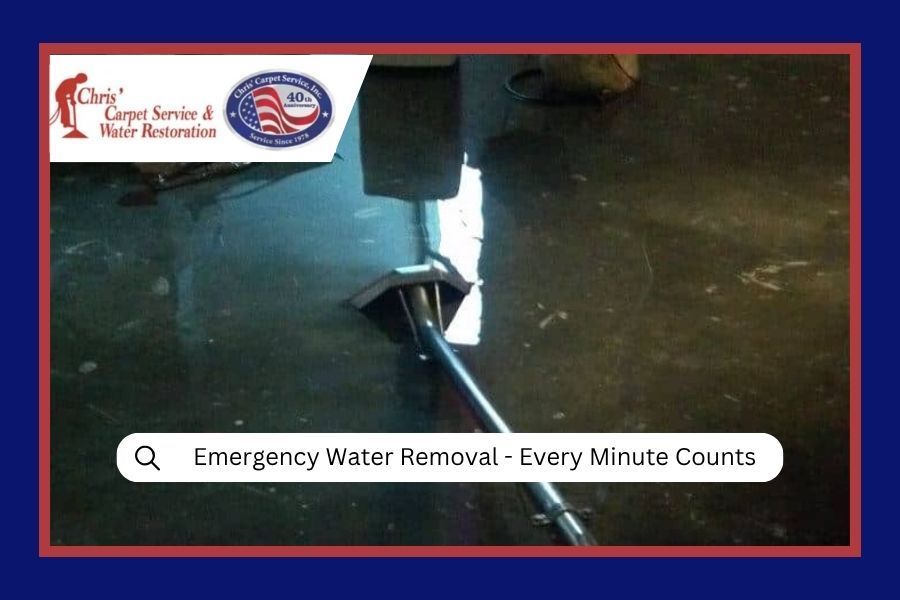
Emergency Water Removal - Every Minute Counts
Water doesn't wait. Whether it's a burst pipe, a washing machine that decided to retire dramatically, or a storm pushing water under your back door, the clock starts the moment flooding begins. At Chris' Carpet Service & Water Restoration, we've been responding to water emergencies across the Tampa Bay Area since 1976. The one thing we can tell you with absolute confidence: emergency water removal handled quickly makes an enormous difference in what can be saved and what has to go.
This guide breaks down why timing is so critical, what you can do in the first few minutes, and what professional extraction looks like from start to finish.
Why Speed Matters in Water Emergencies
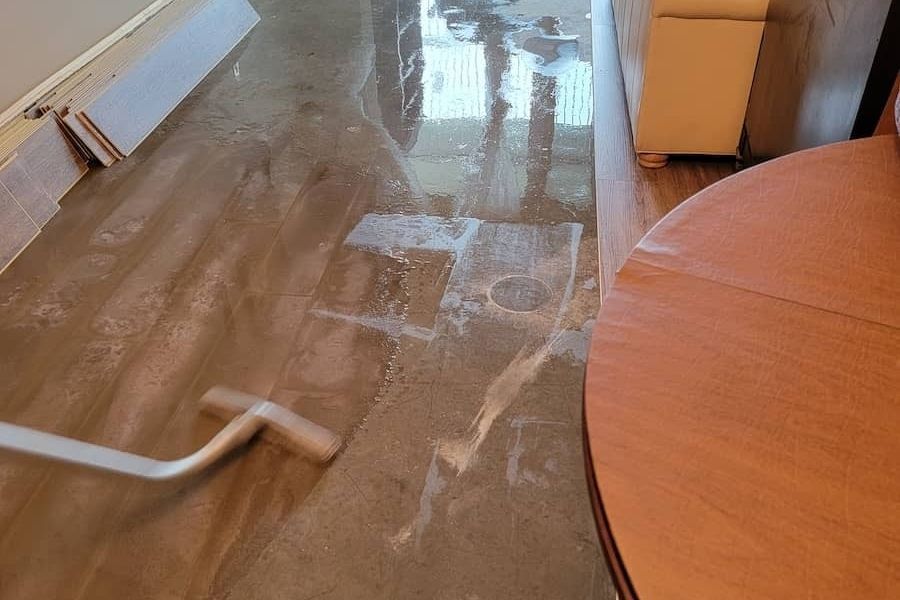
Water moves fast and settles in fast. Within the first hour, standing water seeps into porous materials like drywall, carpet padding, and wood subfloor. By the time 24 hours have passed, the EPA notes that mold can begin to develop in persistently wet conditions, which are essentially the permanent weather conditions here in Florida. Waiting doesn't just make cleanup harder; it can turn a water problem into a mold problem, and that's a whole different project.
We've walked into homes where the homeowner spent a day trying to handle things with towels and fans. The visible water was gone. But moisture had already moved deep into walls and under flooring, and secondary damage had set in quietly. That's the tricky part about water damage: what you can see is rarely the whole story.
Water in your home right now? We respond fast, 24 hours a day, 7 days a week.
Contact Our Team NowWhat Happens to Your Home When Water Sits
Here's a rough look at how a water event progresses when extraction is delayed. Florida's heat and humidity tend to accelerate all of it.
What You Should Do Right Now
Before professionals arrive, there are a few things you can safely do to limit damage. If there's any chance of electrical hazards, or if the water source is sewage-related, skip these steps and call immediately.
Your First 10 Minutes: Quick Checklist
- Shut off the water source if you can safely reach the valve.
- Turn off electricity to affected areas at the breaker box, but only if you're not standing in water.
- Move valuables, documents, and electronics to a dry room or higher ground.
- Take photos and video before moving anything. Your insurance adjuster will want documentation.
- Call a restoration company right away. Our team at Chris' Carpet Service & Water Restoration answers 24/7.
Don't use a standard household vacuum on standing water. It isn't built for it and creates a safety risk. Shop vacs can handle small amounts on hard floors, but they can't pull moisture out of padding, walls, or subfloor material.
The Emergency Water Extraction Process
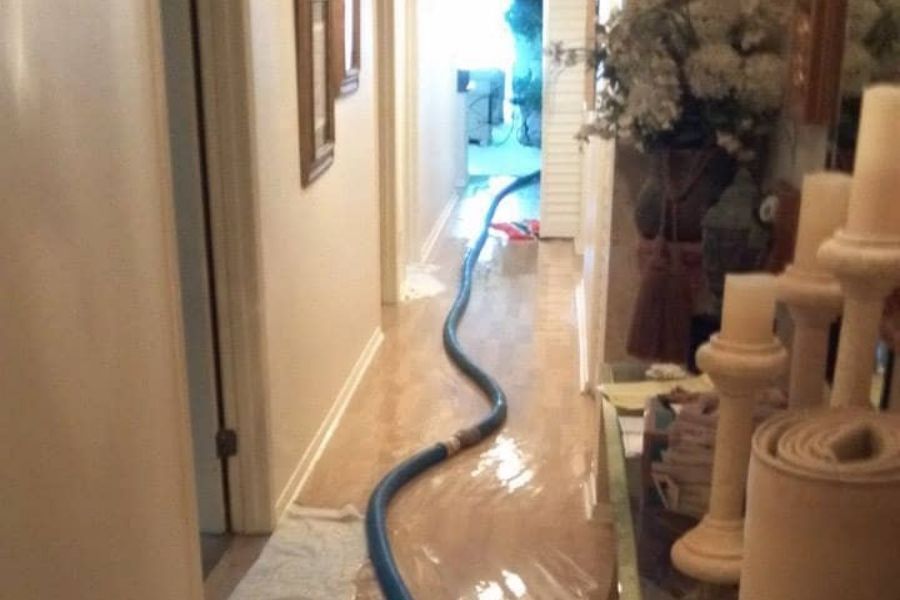
Professional water extraction is a lot more than showing up with a pump. Here's what the process actually looks like once our team arrives on site.
Assessment and Moisture Mapping
We use moisture meters and thermal imaging tools to find where water has actually traveled, not just where you can see it. Water migrates through walls, floors, and ceiling cavities in ways that aren't visible to the eye. Mapping the affected area lets us target the right zones and catch hidden pockets before they become a mold problem.
Standing Water Extraction
Commercial extraction units remove standing water far faster and more thoroughly than anything available at a hardware store. These pull water from carpet fibers, padding, and hard flooring surfaces. It's the most critical step in the process, and it sets up everything that comes after.
Controlled Demolition When Needed
Sometimes material has to come out. Saturated drywall can't dry in place; it stays wet and grows mold. Wet insulation holds moisture for weeks. We keep demolition targeted and strategic, focused on mitigation rather than full reconstruction.
Drying and Dehumidification
Industrial air movers and dehumidifiers do the heavy lifting after extraction. The IICRC S500 standard guides how drying goals are set and monitored throughout this phase. Our IICRC-certified team follows those protocols on every job, tracking moisture readings at regular intervals until structural materials reach safe levels.
See how our team handled a real water emergency from arrival to dry structure.
Read the Case StudyDIY Cleanup vs. Professional Water Extraction
Here's an honest side-by-side of what DIY cleanup can and can't accomplish when you're dealing with a real water event.
| Factor | DIY Cleanup | Professional Extraction |
|---|---|---|
| Removal Speed | Slow; limited to visible surface water | Fast; pulls moisture from structural materials |
| Hidden Moisture | Cannot detect or address | Mapped with meters and thermal imaging |
| Mold Prevention | Limited if moisture stays in structure | Monitored drying reduces risk significantly |
| Insurance Docs | Up to you to compile | Provided as part of service |
For anything beyond a small, contained spill on a hard floor, professional extraction is almost always the smarter call. The equipment and the process genuinely deliver better outcomes. If you're in the Tampa Bay Area and not sure whether your situation warrants a call, reach out and we'll be straight with you.
For more on what to expect, our posts on emergency steps for water damage and how long water damage takes to dry are good next reads. And if storm surge or flood damage brought the water in, the same urgency applies and we handle that too.
Frequently Asked Questions
How quickly does professional water extraction need to happen after a flood?
Ideally within the first few hours. The faster water is extracted, the less it penetrates walls, flooring, and structural materials. In Florida's humid climate, mold conditions can develop within 24 hours, so same-day response is strongly recommended.
Can I dry out my home myself after water damage?
You can remove surface water with towels or a shop vac, but this won't address moisture that has moved into walls, subfloor, or carpet padding. Without proper extraction equipment, hidden moisture often leads to mold and continued structural damage.
Does emergency water removal cover sewage backups?
Yes, though sewage backups require additional safety precautions and disinfection because the water is contaminated. It's important not to handle sewage-contaminated water without proper protective equipment. Our team handles sewage cleanup as a related service.
Will my homeowner's insurance cover emergency water extraction?
Many policies cover water damage from sudden events like burst pipes or appliance failures, though coverage varies by policy. Our team works with insurance companies and documents damage for claims using industry-standard Xactimate pricing, which adjusters recognize and accept.